
Mark Zuckerberg covers his laptop camera and microphone because remote webcam hijacking is a proven, well-documented attack that even the most technically sophisticated targets cannot fully defend against with software alone. When the CEO of Meta physically blocks his own lens with a piece of tape, it is not paranoia. It is threat modeling.
This matters for executives handling M&A discussions, journalists protecting sources, healthcare workers on telehealth calls, and lawyers dealing with privileged material. If you sit in front of a laptop or phone camera during sensitive conversations, the same reasoning that made Zuckerberg reach for tape applies to you. This article explains what actually happened, why the threat is worse now than it was in 2016, and what to use instead of tape.
For a deeper look at physical privacy hardware, the Spy-Fy privacy case collection applies the same principle Zuckerberg uses, minus the residue.
The photo that started the conversation
In June 2016, Zuckerberg posted an Instagram photo celebrating Instagram passing 500 million monthly users. In the background sat his MacBook. Sharp-eyed observers, including security researcher Chris Olson, noticed two things: a piece of tape over the webcam and a second piece over the dual microphone jack.
The image went viral because it forced a simple question. If the founder of Facebook, a man with access to the best security money can buy, still tapes over his camera, what does he know that the rest of us do not?
Then-FBI Director James Comey answered that question a few months later at a Center for Strategic and International Studies event. He confirmed he covers his own laptop camera too, calling it a "sensible thing" and comparing it to locking your car or office door. Edward Snowden has been photographed with taped-over devices for years. The habit is not fringe. It is standard operating procedure among people who understand the actual threat surface.
What Zuckerberg is actually defending against
The threat is a category of malware called Remote Access Trojans, or RATs. Once installed on a machine, a RAT gives the attacker full control including the ability to activate the webcam and microphone silently, often without triggering the indicator light. Tools like BlackShades sold openly for around $40 before the FBI shut down the operation in 2014, and successors continue to circulate on the same forums.
Three details make this worse than most people assume:
- The indicator light can be bypassed. Researchers at Johns Hopkins demonstrated in 2013 that MacBook webcam LEDs could be disabled while the camera stayed active. Similar techniques exist for other hardware.
- Delivery is trivial. A single phishing email, a malicious browser extension, or a compromised software update can install a RAT. High-profile targets face spear-phishing campaigns tailored to them.
- Extortion is the endpoint. The 2013 case of Miss Teen USA Cassidy Wolf, whose classmate secretly recorded her through her webcam for over a year, is the template. Sextortion cases now number in the tens of thousands annually according to FBI advisories.
The mic tape addresses a parallel threat. Audio is often more valuable than video for corporate espionage, because a hot mic in a conference room can capture negotiations, passwords spoken aloud, or attorney-client discussions. Our breakdown of the five reasons to tape off your webcam covers the underlying threat categories in more detail.
Why the risk got worse, not better
The 2016 photo predates several developments that make physical camera covers more relevant than ever.
Mobile is now the primary target. The Pegasus spyware investigations, documented by Citizen Lab and Amnesty International, confirmed that zero-click exploits can silently take control of iPhone cameras and microphones without the user tapping anything. Journalists, dissidents, and executives have all been confirmed victims. Your phone camera is now a more likely attack vector than your laptop.
AI changed the payoff. A few seconds of captured video or audio is enough training data for a convincing deepfake. Extortion campaigns no longer need genuine compromising footage. They can fabricate it, then use real captured background details to prove they had access.
Smart devices multiplied the surface. Smart TVs, video doorbells, baby monitors, and conference room cameras all run software, all connect to networks, and all have been demonstrated as pivot points for attackers.
Why tape is a bad long-term solution
Zuckerberg used tape because in 2016 there were few purpose-built alternatives. Today, tape is the worst option available. Here is why professionals have moved on:
- Residue. Adhesive tape leaves gum on the lens that smears every future photo and video call.
- It falls off. A cover that peels away in your bag is not a cover.
- It looks unprofessional. A visible strip of black electrical tape on your MacBook during a client meeting sends a specific signal, and it is not the one you want.
- It breaks phone sensors. Sticking tape over an iPhone front camera disables Face ID, breaks Attention Awareness, and interferes with the ambient light sensor. On the rear, it can affect flash and LiDAR performance.
The alternatives fall into two categories: slim sliding covers for laptops and monitors, and cases with built-in sliding covers for phones. Both work on the same principle Zuckerberg established, a physical barrier that cannot be defeated by software, without the drawbacks of tape.
Tape vs. sticker vs. sliding cover: what actually works
A quick comparison of the four common approaches:
| Method | Blocks camera | Reusable | Leaves residue | Works on phones |
|---|---|---|---|---|
| Electrical tape | Yes | No | Yes | Poorly, blocks Face ID |
| Adhesive sticker | Yes | Limited | Yes, over time | Poorly |
| Laptop sliding cover | Yes, when closed | Yes | No, after removal | No, laptop only |
| Privacy case with built-in cover | Yes, when closed | Yes, integrated | No | Yes, designed for it |
For laptops and external monitors, a slim sliding cover applied once is the accepted standard. Our complete guide to webcam covers for laptops walks through sizing, placement, and MacBook-specific considerations like avoiding the ambient light sensor.
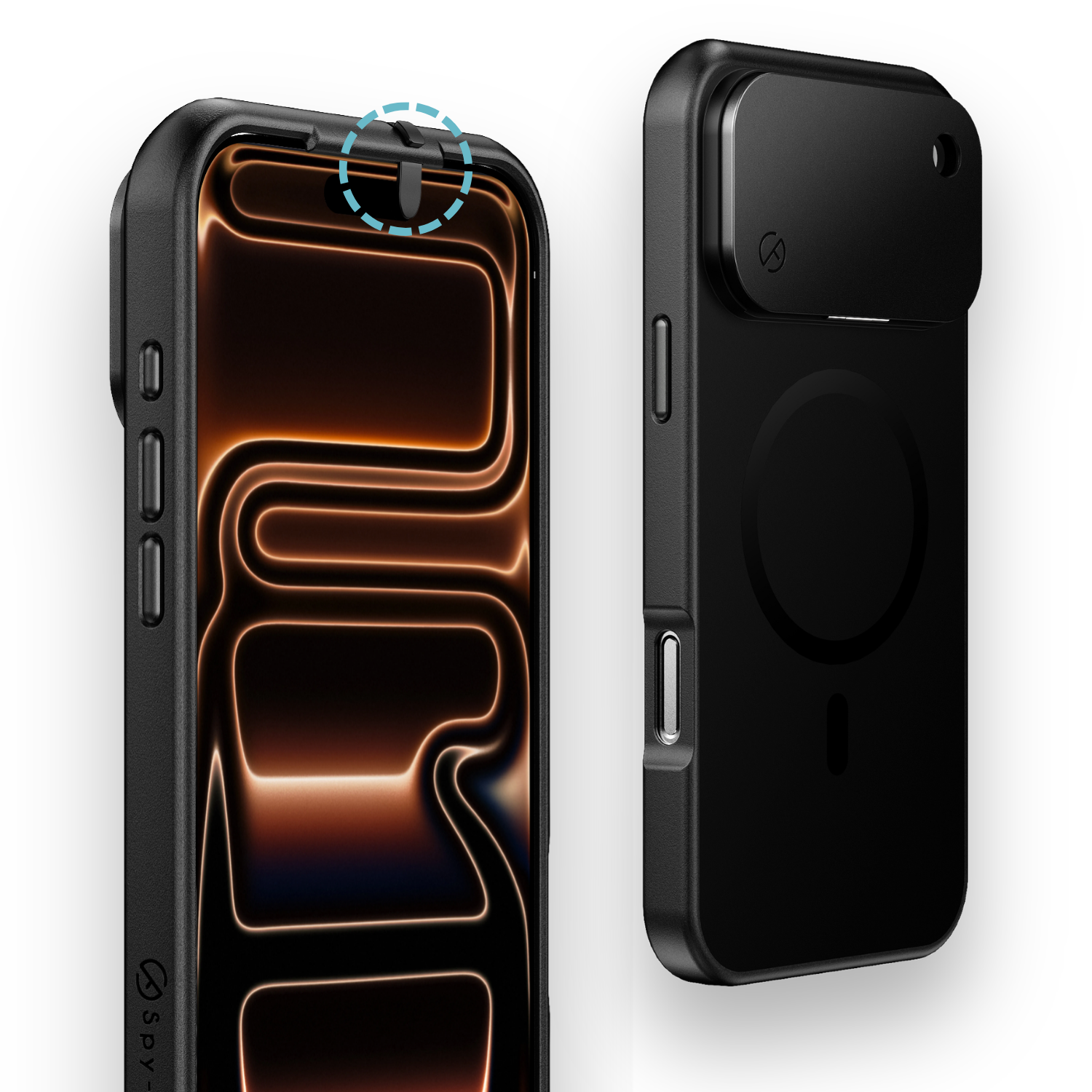
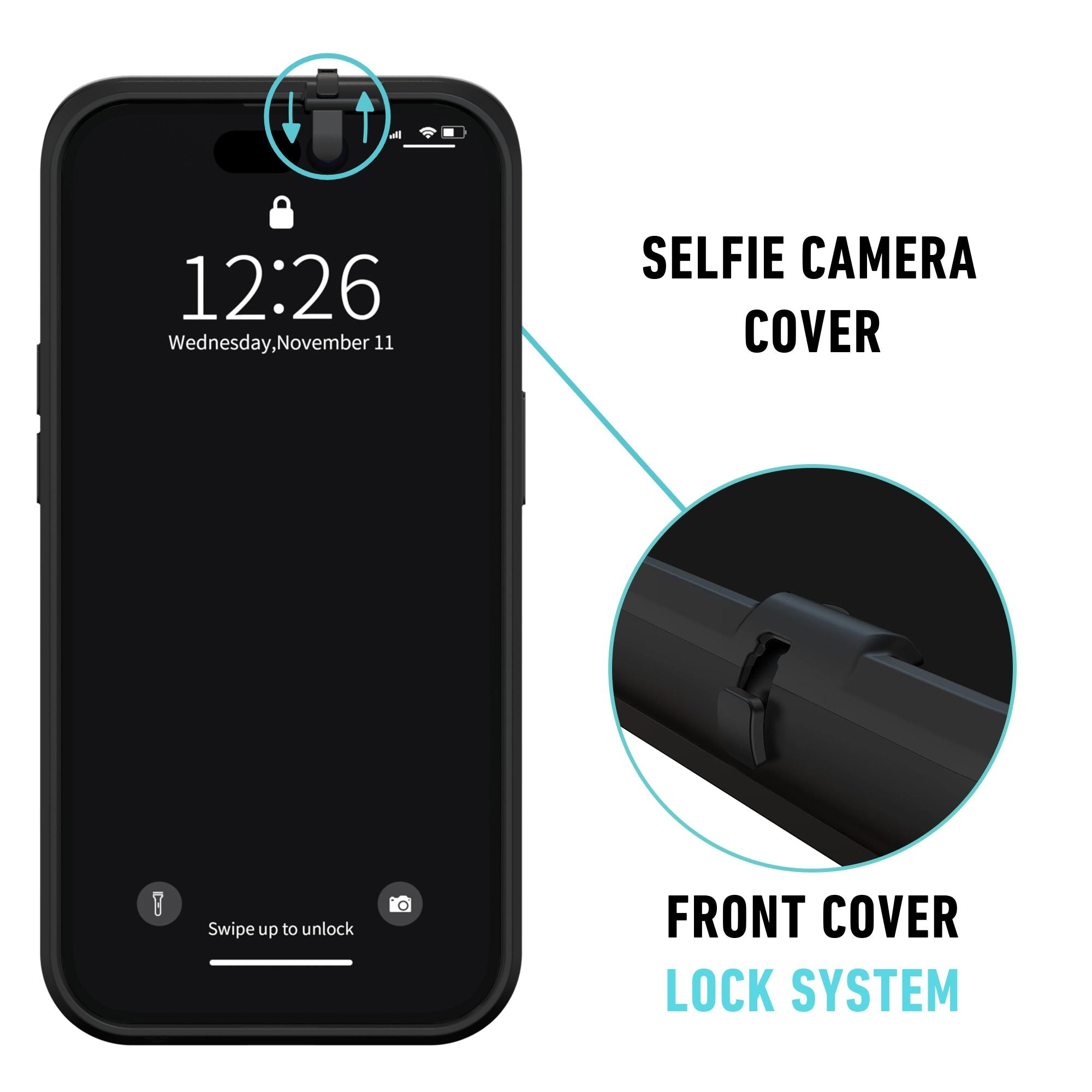
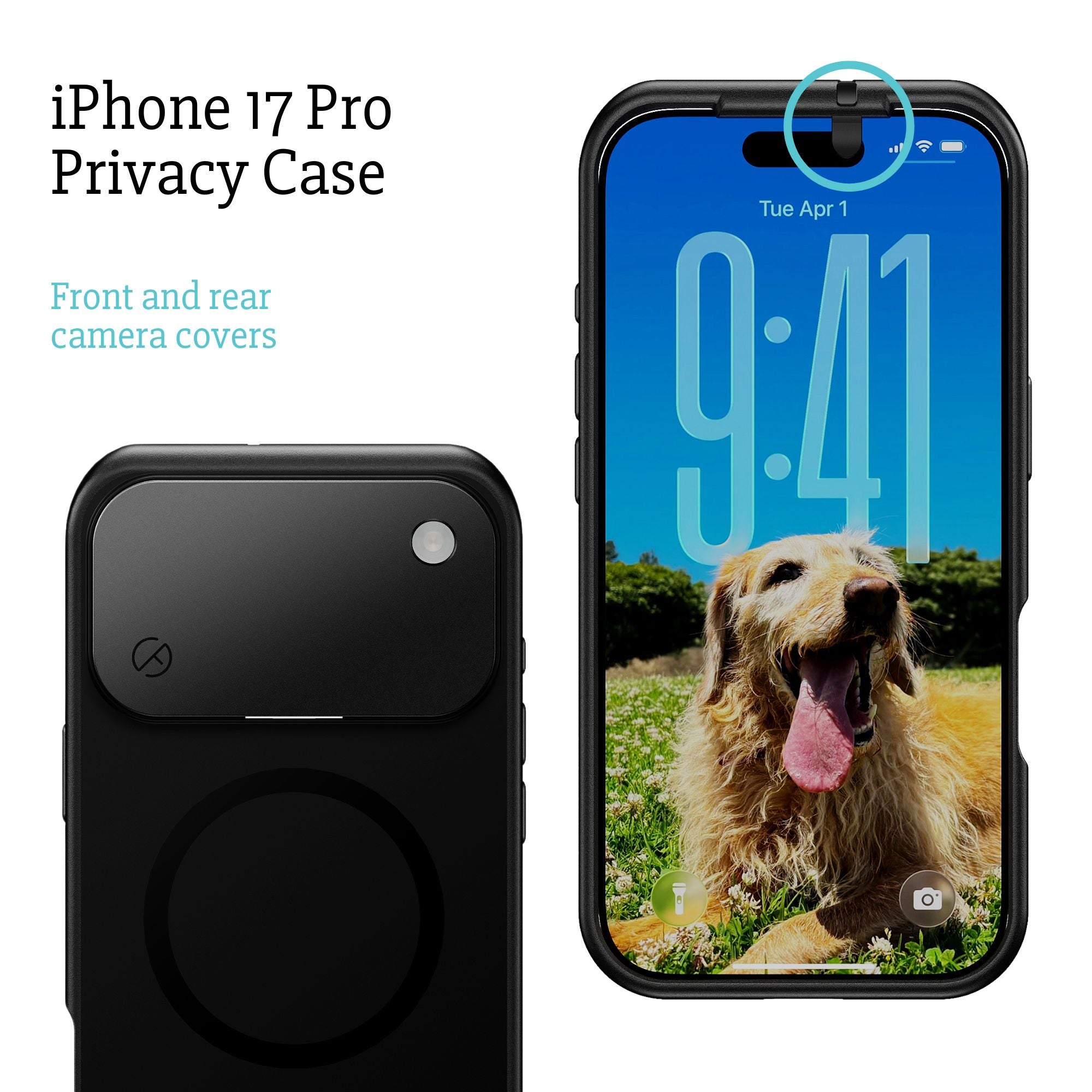
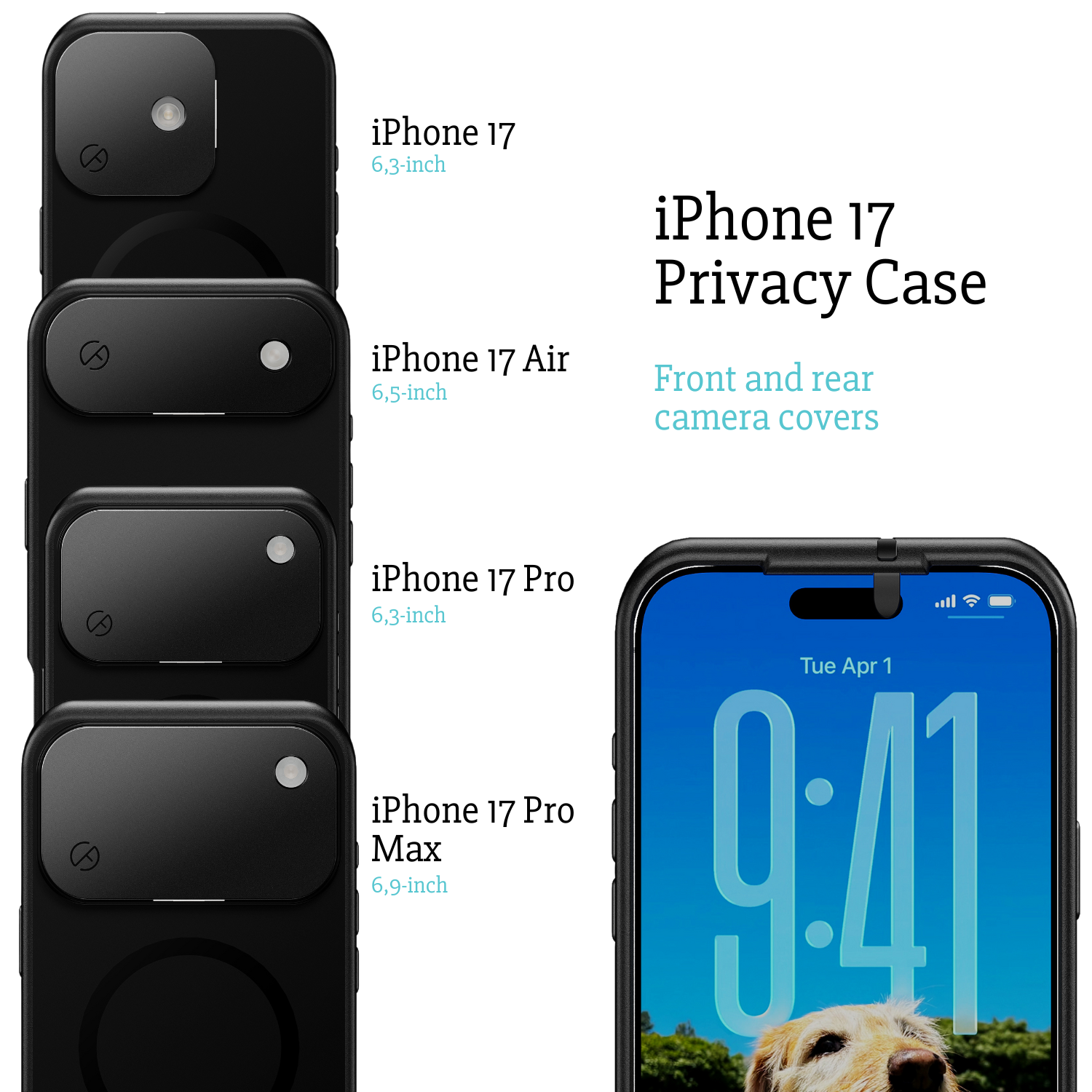
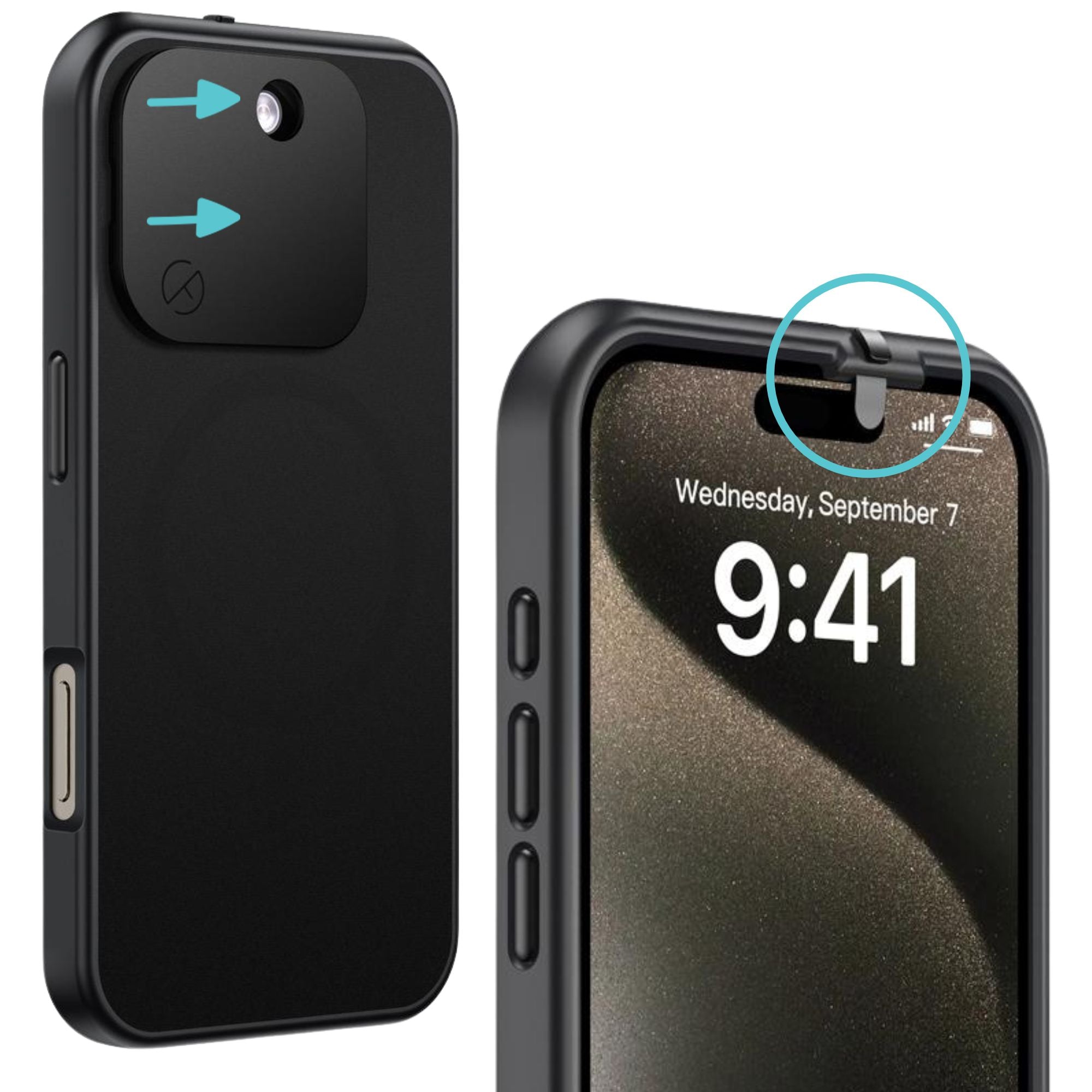
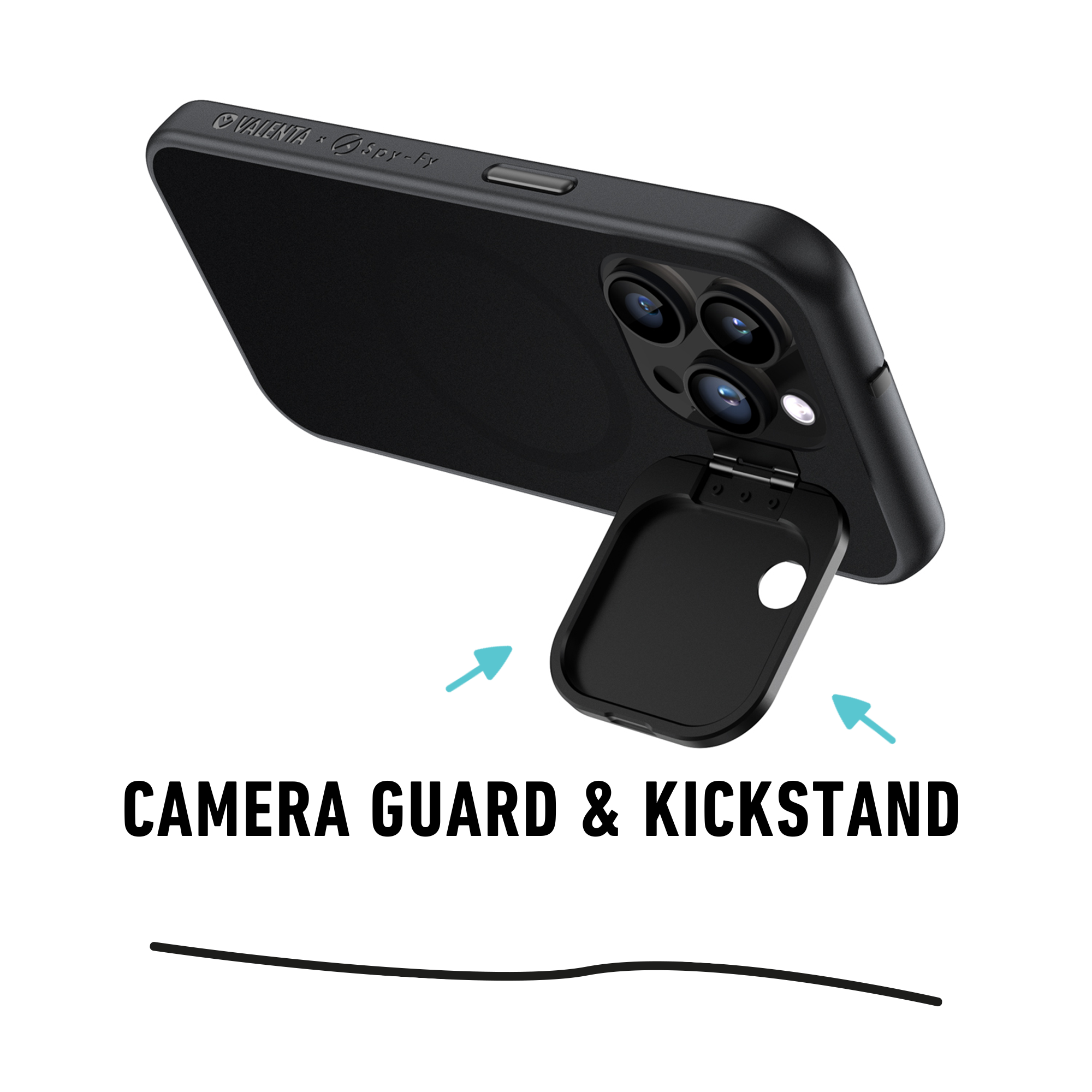
For phones, the equivalent is a case with an integrated sliding cover over the front camera and a flip cover over the rear. The iPhone 17 Privacy Case keeps Face ID functional when the cover is open, blocks the front lens fully when closed, and the rear cover lets the flashlight through so nothing on the phone breaks.
Who else does this and why it is not paranoid
Beyond Zuckerberg, Comey, and Snowden, the list of public figures who cover their cameras includes tech executives, national security officials, and investigative journalists. It is common practice inside SCIFs (Secure Compartmented Information Facilities), law firms handling sealed cases, and newsrooms working on source-sensitive stories.
The reasoning is consistent. Software defenses fail. Antivirus catches known threats, not zero-days. Operating system permissions can be tricked by malicious apps or bypassed by exploits. A camera cover fails only if the plastic breaks, which is a threat model most people can live with.
The framing that helps is this: covering your camera is not about assuming you are a target today. It is about removing an attack path so that if you become a target tomorrow, one entire category of compromise is off the table. That is defense in depth, the same principle behind seat belts and fire extinguishers.
What to do next
Zuckerberg's tape was a public admission that software cannot protect a camera. Nothing in the last decade has changed that. What has changed is that you no longer need to use tape. Purpose-built covers exist for every device you own.
The practical steps: put a slim sliding cover on every laptop and external monitor you use, replace any tape or stickers on your phone with a case that has a built-in camera cover, and treat every camera on a network-connected device (smart TV, doorbell, conference room) as a potential vulnerability worth blocking when not in active use.
If you want the cleanest version of what Zuckerberg does, browse the full Spy-Fy privacy case collection for iPhones from the 12 through the 17 series, all with built-in front and rear camera covers. Same principle as the tape on Zuckerberg's MacBook. Better execution.